Intersectionality as the New Dogmatics
A Theological Reflection on the Shifting Landscape of Christian Thought

What good is a blog if you can’t at least periodically write about something that perhaps only you and a few others will have interest in? Right? This one is long, and it won’t be for all readers. But here we go…
A story to start. Last night at the final dinner of the conference for the Louisville Institute, where I received a grant to fund a study this next year in LGBTQIA+ Church-based Shelter as Mutual Aid, I ended up sitting down at a table with a group of post-docs, all of whom have two year fellowships to work as teachers at various seminaries and universities.
Between us was a Disciples of Christ mission developer from Texas who sits on the Louisville board. She and I, upon hearing that the post-doc teaches systematic theology, perked up our ears.
“They still teach that?” I think we may have both jokingly asked. Because it is the case that in many seminaries there has been a decided move away from “systematics” or dogmatics.
The answer was yes, and then we quickly launched into the kind of game familiar only to those who read systematic theology intensely: we started dropping names.1
So first we asked, Who do you really love as a systematician? We discussed a bit the decline of the discipline, and this fellow mentioned the chance she’d had over the past few years to work closely with Katherine Sonderegger, one of the few theologians of the “liberal” variety who is still publishing straight up “systematic” theology.
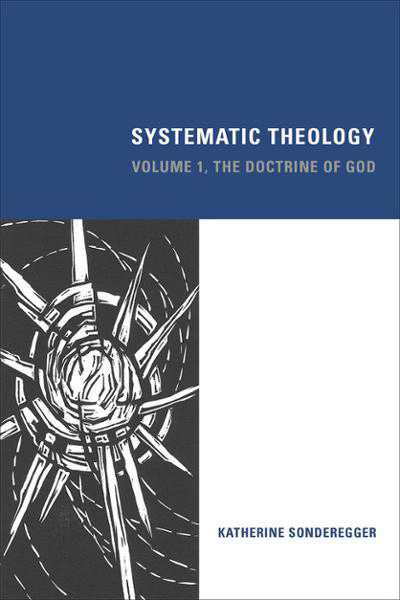
After that initial round, we were off on a systematics game (you know the kind of game where you are also low-key one-up-ing each other, but in a fun way). Who’s your favorite living systematician? Who is overlooked or doesn’t quite count but you count anyway? What’s your guilty pleasure? If you could only have one on a desert island who would it be? In that order, mine were James Alison, Dorothee Soelle, Colin Gunton, and Ernst Käsemann.
But it really was true that the board member’s nearest seminary, Brite, has gotten away from having any classes in what might be called “systematics,” and then that got me thinking about the topic I’ve been meaning to write about as a blog post for a while now, with the title “Intersectionality as the New Dogmatics.”
Way back in the aughts, it was my real honor and joy to get to participate in a program (also funded by Lily) called the Pastor-Theologian program, where we were given opportunity to gather with other pastors also interested in doing “theology.” We’d gather quarterly with theologians from across the ecumenical and religious landscape for retreats. I still remember those gatherings with tremendous fondness, and I remember in particular that at the first gathering, it wasn’t until the second day of the retreat that we all decided, post facto, that we probably should do introductions of ourselves and families rather than just intensely debate theology, illustrating how starved we all had been for such conversation.
So consider the following a continuation of that fun dinner conversation about systematics, and an invitation (for those who share this fascination) to discuss the shift.
In recent decades, looking at what is published by religious publishers and what is taught in seminaries, Christian theology has witnessed a seismic shift. Classic systematic theologies (think of collections like Wolfhart Pannenberg’s trilogy, or the two volume Christian Dogmatics a lot of Lutherans read when I was in seminary), hermetic edifices that organize doctrines of God, Christ, creation, sin, redemption, and eschatology into coherent, systematic form, are no longer the dominant mode of theological production or reception within many academic and ecclesial contexts. In their place has arisen a constellation of intersectional, contextual, and liberation-oriented theologies that resist monolithic structures and prose theologies that map the contours of truth rather than assemble them into systems (some fantastic examples here include William James Jennings The Christian Imagination: Theology and the Origins of Race, or Linn Marie Tonstad’s God and Difference: The Trinity, Sexuality, and the Transformation of Finitude). It is at once exhilarating and unsettling to see how richly these voices (and there are so many) have deepened our understanding of God’s presence in the suffering of marginalized peoples.
And yet when we ask whether we still have a robust dogmatic center or even an aiming toward one, the question becomes pertinent.
So I’m here exploring that tension, thinking about the rise of intersectional theologies as a new (20th century) mode of theological articulation, pondering the decline in the publishing and reading of “classical” systematic theologies, and wondering if it is either possible of valuable to consider a renewed theological task that honors (liberative) context(s) without collapsing into fragmentation.
So what do we mean by systematic theology?
Classic systematic theology seeks to articulate the Christian faith as a coherent whole. It draws from Scripture, tradition, and reason to shape doctrines of God, Christology, pneumatology, ecclesiology, ethics, and eschatology into a unified schema. Think of Athanasius on the incarnation, Aquinas on God’s being, Barth on election, Moltmann on the crucified God, or contemporary efforts like Katherine Sonderegger’s Systematic Theology, all of which aim to answer the perennial question: What does the entirety of the Christian tradition mean for the world and our faithful discipleship today?
Systematic theology asks (sometimes after lengthy throat-clearing around “method”):
Who is God?
What is Christ’s saving work?
How is the church to be ordered?
What is the nature of sin, grace, and redemption?
How do we live toward God’s future?
I don’t know about it’s perennial value but I do know that I have periodically really enjoyed reading works organized in this way, relaxing into a certain kind of coherence, doctrinal memory, and organizing purpose. These generally have not been closed systems (Barth wrote his through his whole life and never finished), but it is a disciplined one.
And what is intersectional theology?
Intersectional theology, by comparison, is a genealogical heir or maybe a broad term for feminist, Black, queer, postcolonial, disability, and other liberation theologies, which refuses to abstract the Christian message from lived suffering. It insists that doctrines must speak from within the intertwining realities of race, class, gender, sexuality, colonial histories, and power. Drawing on (or if written prior resonant with) Kimberlé Crenshaw’s formulation of intersectionality as overlapping systems of oppression, intersectional theology frames Christian concepts through lived positionalities.
Intersectional theology has been tremendously helpful in my own life (I’ve really never been the same since reading James Cone’s The Cross and the Lynching Tree, for example). Key contributions of this approach to theology include:
A deepened account of how sin operates not only individually but structurally. So not “systematic” theology but “systemic…”
A reading of Scripture that honors the voices of those on the margins (e.g. the Exodus as liberation narrative, prophetic critiques of empire).
Ethics rooted in solidarity and justice rather than abstract moralism.
These theologies are profoundly responsive, critical, and ecclesially attuned, often responding to the moments we are facing, and they have transformed Christian praxis. They have also reshaped theological production to be less hierarchical, less centered on Western canonical voices, instead valorizing embodied theological voices from communities historically marginalized by both society and the academy. They also, like some systematics, include considerable throat-clearing articulating the critial theory of intersectional analysis before getting around to “theology” proper.
Why Systematic Theology has declined…
It isn’t hard to notice that systematic theology doesn’t really sit at the center of the theological ecosystem anymore. The big, slow, comprehensive projects that once tried to say “this is how the whole thing hangs together” have largely given way to something else. Part of that shift is frankly earned. The suspicion of “totalizing narratives” didn’t come from nowhere. Too often those narratives were built by privileged people (white men) insulated from suffering2, and too often they baptized the world as it was rather than telling the truth about who was being crushed beneath it (Cone points this out noting white theologian’s silence in comparing the cross to lynchings). When systematic theology starts to feel like an elegant abstraction hovering above real bodies, it’s no surprise that people stop trusting it.
At the same time, theology has genuinely exploded in its diversity, and that’s a gift. Feminist, womanist, queer, Black, Latina/o, decolonial, disability, and other theologies have reoriented the questions themselves. Theology has seen a proliferation of voices and wider representation both in who writes theology, and who it includes.
But as the field has become more honest about context, it has also become more decentralized.3 The old assumption that there was a single doctrinal axis around which everything turned no longer holds. Instead, there are many centers, each generated from particular histories, wounds, and forms of resistance (one title especially highlights this in a wonderful way: Transformative Lutheran Theologies, edited by Mary Streufert, which highlights that there are multiple Lutheran theologies, plural). Truth is spoken, but it is spoken from somewhere, and that “somewhere” matters not only so that readers might be aware of the social location of who wrote it, but also how that social location shapes the theology itself.
What we’ve gained in depth and accountability, though, we’ve sometimes lost in shared grammar.
The church’s own priorities have shifted along similar lines. In congregations and seminaries alike, the urgency of practice presses in. People want theology that helps them preach, organize, accompany the grieving, confront injustice, and survive the world as it actually is. Faith responding to reality, as it were. But this does mean that slow doctrinal formation, learning how creation, Christology, sin, grace, and eschatology belong to one another, often gets sidelined (and here I haven’t even mentioned that perhaps people are just, by and large, reading less than they used to, and certainly reading less long or multi-volume works).4
In other words in this new moment, we know what we’re against, we know where God shows up, but w are sometimes less clear on how the whole story is meant to be told.
And then there’s the very unromantic matter of publishing. Big systematic theologies are expensive, risky, and slow. They take years to write and even longer to read. In an academic (and social media) economy that rewards speed, interdisciplinarity, and manageable outputs, the massive multi-volume dogmatics simply don’t make much sense (this is why Katherine Sonderegger’s whole project is so remarkable and so rare). Even when they are written, they tend to circulate among specialists rather than shaping the imagination of the church.5
All of this adds up to a real tension I’m struggling to resolve. Contextual and liberation theologies are indispensable. They have taught the church how to see what it refused to see before, and they stand as a radical critique of many theologies too abstracted from issues of liberation. But on their own, they don’t always attempt to say what the faith is as a whole. They are brilliant at illumination, at exposing particular sites where God’s justice and mercy break in. They are less often asked to hold together doctrine, the creeds, worship, ethics, and hope in a single, sustained vision. Without some kind of systematic work, however provisional, however chastened, we risk losing something.
If dogmatics is, at its best, the church’s attempt to speak carefully about God by holding Scripture, tradition, reason, and lived experience in some kind of creative tension, then it seems to me that intersectional theology has quietly become a form of dogmatics in its own right, if assembled as a pastiche of multiple authors. It doesn’t usually announce itself that way, and it is often suspicious of the very word, but functionally it is doing dogmatic work. It is asking the classic questions again: Who is God? Where is Christ at work? What does salvation look like? What is the church for But it insists on asking them from within bodies marked by race, gender, sexuality, disability, class, and history. The starting point shifts.
So when intersectional theology speaks of God, it tends to be less interested in metaphysical refinements and more attentive to where power grinds people down. God is not first encountered as an essence to be defined or an analogy to be carefully calibrated (think here of the work of Schleiermacher or Tillich, as just a couple of examples), but as a presence, or an absence, felt in places of racialized violence, gendered harm, economic precarity, and queer erasure. The doctrine of God begins not in the safety of the study but in the question of whether God can be trusted where the world is most untrustworthy. Talk of divine power is immediately pressured by the realities of human power, and whatever we say about God has to make sense there, or it is rightly suspected.
Something similar happens with Christology. Intersectional readings do not discard the language of Logos or incarnation, but they refuse to let it float free of history. Christ is not only the one through whom all things were made; Christ is also the one who runs headlong into the machinery of empire and is crushed by it. The cross is not simply a transaction in a cosmic economy of sin and forgiveness, it is a disclosure of what imperial power does to vulnerable bodies. That doesn’t negate classical Christology so much as drag it back to its nerve endings, forcing it to remember that salvation is worked out in flesh and blood, not just in ideas.
The Spirit, too, becomes harder to domesticate. Rather than being described primarily as an inward, private consolation, the Spirit shows up as movement, disruption, and insistence. The Spirit agitates, organizes, unsettles, and refuses to let injustice present itself as normal. Pneumatology turns outward, toward the reshaping of social life, and liberation begins to look less like a metaphor and more like a concrete expectation.
And the church, under this pressure, can no longer pretend to be a neutral guardian of timeless truths. Intersectional theology imagines the church less as a well-ordered institution defending the boundaries of orthodoxy and more as a fragile, imperfect coalition, people bound together across difference by shared vulnerability and shared resistance. The work of the church becomes learning how to listen without controlling, how to grieve without rushing to resolution, how to act without erasing one another, and how to hope without lying about the cost. It stops being as much about ecumenical agreements or historical inquiries into apostolic succession.
None of this stands over against dogmatics as such. It simply relocates dogmatics. What once claimed to speak from nowhere specifically but somehow about everything is now forced to speak from somewhere about… some things. The margins are no longer treated as applications of theology but are instead front-loaded, the place where theology actually happens where doctrine is tested.
Intersectional theologies often resist anything that smells like system-building, and for good reasons. Systems have a long history of deciding in advance who counts as fully human and whose suffering can be treated as a footnote. So the allergy to coherence is understandable. Still, the rejection of systematics doesn’t come without its own costs. Over time, communities begin to lose a shared theological memory. We end up fluent in critique but less confident in confession. We know how to name what is broken, but we struggle to say, together, what we actually believe about God, sin, grace, and hope in any sustained way. Theology becomes episodic rather than cumulative.
This is where some of the conservative critique of intersectionality, even when badly motivated or crudely expressed, occasionally brushes up against a real concern. When intersectionality is described as an “ersatz religion,” the charge is usually leveled in bad faith, as a way of defending unexamined power or dismissing demands for justice. But beneath the polemic there is an anxiety worth naming. Intersectionality can function, at times, as a comprehensive interpretive framework that explains everything while refusing to say what it ultimately worships. It offers a powerful diagnostic account of the world, a moral grammar, even a sense of righteousness and transgression, but it is often deliberately agnostic about transcendence, forgiveness, or grace. That doesn’t make it a religion, but it does mean it can begin to carry doctrinal weight without admitting that it is doing so.
This is fine inasmuch as intersectionality remains critical theory. It becomes problematic if and when it stands in fully in place of theology. Faithful discipleship isn’t sustained by critique alone, no matter how necessary that critique is. It requires teaching that unfolds over time, that binds Scripture, tradition, reason, and moral formation together into something people can actually live inside. Without some integrative work, theology risks becoming a mosaic of urgent, truthful fragments that never quite cohere into a shared confession or a durable hope.
Which brings me (you knew it was going to happen) to Lutheran theology. If there is a tradition that should be suspicious both of totalizing systems and of moral frameworks that quietly become law, it is this one. Lutheran theology already knows that even our best constructions are curved in on themselves. It already insists that God is known most clearly not in displays of power or coherence, but under the sign of the cross. That gives Lutheran systematics a peculiar freedom. It doesn’t need intersectionality to become its doctrinal center in order to take it utterly seriously. In fact, it probably shouldn’t. Intersectionality is not gospel. It does not forgive sins. It does not raise the dead. But it can function as a deeply important theological conversation partner, a way of sharpening our law-talk, of telling the truth about how sin operates socially and structurally, and of exposing where the church has confused order with justice.
So the question isn’t whether a Lutheran systematic theology could be written today that ignores intersectionality. That would be both impossible and irresponsible. The question is whether a Lutheran systematics could be written that takes full account of intersectional insight without allowing it to become the hidden dogmatic core. A theology that lets intersectionality do its proper work, naming harm, locating bodies, unmasking power, while still letting the gospel interrupt every framework, including the ones we most need.
That kind of systematics wouldn’t look like the old ones. It would likely be slower, more provisional, more open to interruption (there are intimations of this in some Lutheran theologians like Vitor Westhelle and Dorothee Soelle). It would have to be written with its ear to the ground and its eyes fixed, however falteringly, on the crucified God.
The rise of intersectional and liberation theologies is a gift to the church, a hard-won correction to theological blindness and bad faith. It also arises out of entirely different material academic contexts where authorship has been transformed by who is doing it. But the quiet disappearance of systematic theology leaves a gap that critique alone cannot fill. The task before us isn’t to look back nostalgically or to build bigger systems.
I guess it would be to attempt a chastened dogmatics (inter-systemetic theology?) grounded in the realities intersectional theology names, and yet anchored in the strange, stubborn coherence of the gospel. Not an either/or, but a risky both/and (let the Lutherans understand): a theology that listens carefully to the cries of the oppressed, and still dares to proclaim a hope that does not finally depend on our ability to get the analysis right and risks a breadth we might not otherwise dare.
I’ll stop here. But I’m aware that this whole conversation really wants to be run again through Lutheran dogmatics in particular. Maybe that’s a future post, if and when I’m ready to open that can.
This same thing happens with groups of people who nerd out over jazz, or board games, or comics, or really any other special interest.
although this critique is somewhat complex, and some of the grandest narratives were written by people who took a stand and were in some ways not insulated
I guess this whole conversation is, in the end, not unlike the conversation in literary studies about the end of the “canon”
A recent exception in my own life. A pastor in California has organized a group of ELCA clergy to read Oswald Bayer’s classic (and long, like 600 pages long) Promissio together via Zoom discussions.
I’ve read widely in theology over multiple decades, and I wish I had written down some notes on all the times many and various theologians and pastors of the 20th century mentioned that they had each volume of Karl Barth’s Church Dogmatics on order so that when it arrived in the mail, they’d drop everything to read it.
Systematic theology usually has a controlling principle ever since Schliermacher used “feeling.” Intersectionality could be a controlling principle. From an intersectional perspective what is God like? Christ? Holy Spirit? Creation? Humanity? etc. When Paul Tillich finished his Systematic Theology he said he should have begun with the Holy Spirit (according to my professor and Tillich’s student, Carl Braaten.) Braaten his own little dogmatics, “The Dynamics of Hope,” in which he covered all the usual dogmatic topics from an eschatological perspective. Geoffrey Wainwright wrote a systematic theology using worship as a controlling principle. I wrote a systematic liturgical theology, “New Creation: A Liturgical Worldview” (Fortress Press, 2000). Its chapters covered Liturgy and Theology, God, Christ, Church, Creation, World, Hospitality, Culture, Evangelism, Prayer, and Christian Life amidst the world, the flesh, and evil—-all within 200 pages. (Most of the chapters originated as lectures but they hang together as a worldview that is projected by the historic liturgy.) As Clint said, a desire for coherence. Like Thomas Aquino’s’ Summa Theological, a desire to make sense of the world. Who doesn’t have such a desire? Philosophy and theology must do this. Fides quaerens intellectum.
Sounds like you would love, I mean *love*, Hanna Reichel's *After Method: Queer Grace, Conceptual Design, and the Possibility of Theology,* where she somehow manages the feat of holding Karl Barth and Marcella Althaus-Reid together.