Movement Pastoring

All right, this one’s called movement pastoring.
Over the past month, I’ve made three road trips in our region.
First, I drove down to Little Rock for the day to visit a parishioner at Children’s Hospital. I spent time with them and their mom there. Children’s Hospital is this amazing, bustling facility, and like I try to do on any hospital visit, we did a mixture of just chatting and being social, praying, and simply being present. In the case of that visit, I’ve been thankful for some good outcomes for them since then, and I continue to pray for recovery.
Of course, when you look out the window of Children’s Hospital, you’re looking directly at the state capital, a place that looms large in a lot of our imaginations in this state because of the current government’s disturbingly autocratic, conservative approach to governance.
Two days later, I drove to Holiday Island, which—whenever I tell people I’m headed there—they always say, “Well, that’s not the name of a place you expect to be in Arkansas.” And I joke and say, every day is a holiday on Holiday Island.
Yes, I really do this… every time. #dadjokes
Holiday Island is basically a retirement community with a golf course outside of Eureka Springs, which itself is a pretty well-known town in the region. It has a claim to being the wedding capital of the South. I don’t know if that’s true anymore, but it is a very interesting town. There’s a haunted hotel with a storied history (the Crescent Hotel, and you really should read the graphic novel). When you drive through it, you feel like you’re somewhere in mountainous Germany or—well anyway—you feel like you’ve either gone back in time or been transposed geographically.
One of my parishioners now lives in an assisted living facility on Holiday Island, and I go out there about every other month to have lunch with him. Sometimes he just wants Subway back up in Eureka. Other times we check out various holes in the wall. He has since found a Methodist church to attend in Eureka, but we’re friends, and I want to keep him connected to our church.
Then this last weekend, on Saturday, I drove to Tahlequah, Oklahoma, where I attended the funeral of the mother of someone who was once a long-time active member of our church. On the drive home I went down a bit of memory lane. It had been a bit since I was out that way. I drove past a little farmlet along the river where I officiated a wedding maybe about a decade ago (I guess I’m still licensed to officiate weddings in Oklahoma), and also passed some of the float companies we’ve used over the years to kayak and canoe on the river.
The drive gave me an opportunity to think about this region I live in a bit more. Sometimes I might go longer stretches of time never leaving Fayetteville, and these drives are always good reminders of how different the cultures are.
I have a little coffee shop and gas station I always stop at—it’s a farm co-op on the way to Eureka—and they had these signs up selling ivermectin for people. I had all kinds of complicated feelings about that advertisement. I mean yes people do use Ivermectin to treat worms, but also is this the main drug to advertise on the front door of a cafe? All I know for sure is they have a great grill, coffee for .50 cents, and coconut chocolate cookies to die for.
I was talking to a pastor friend the other day who mentioned they were feeling somewhat frustrated that they have trouble activating their congregation into resistance or movement building. For them, much of that had to do with the fact that their church is made up of a lot of moderate liberals and older adults.
You know the classic line about moderates: they don’t protest.
So I was processing that experience of my pastor friend and realized that’s not who my church is at all. We are pretty radically progressive across the board. If I go to a protest or another event that is organized on the left, I’m assured to see many of my own congregation members, and in many instances they’re the ones organizing them.
But driving around and doing the pastor thing that I do reminded me that for the vast majority of people who have day jobs and are involved in progressive organizing—and who also have families and kids or are currently in studies—their margin for doing much else is pretty thin.
And even if they have the margin, everybody in that space has to evaluate whether they have the spoons. Many people in our community have things that block them from the level of participation they might otherwise try to offer: social anxiety, illness, or economic struggle, where they’re just not sure they can afford to even drive to the events.
So the reason I raise this is because my one parishioner who lives at the nursing home had this amazing reflection.
He said that his pastor in Eureka Springs often talks about caring for the lonely, the lost, and the least.
And he said that the other day he was supposed to get a ride from someone to go help at a food pantry in Eureka. Then the person backed out of being able to give them a ride. He was really sad and frustrated at first because he felt like God was calling him, through his pastor, to serve in that way, and he was blocked by not having a ride.
But then he reoriented himself and said to himself, essentially: you know, I live here at this nursing home. Perhaps my primary way that I can care for the lonely, the lost, and the least is right here among my neighbors who live here—and even in the way that I care for the nursing home staff.
It was an aha moment for him, and very freeing of a burden he’d had.
And it was an aha moment for me too. As I was driving home I was asking myself to what extent I also preach something along those lines and try to model it, but am not always as sensitive as I could be to the life situation of my own congregation and how that message lands.
So movement pastoring is, at least in part, not assuming that everybody can step out into advocacy spaces that they’ve freed the pastor or their leaders up to do, but taking account of that in how the message is communicated and presented.
I often try to tell myself that this is a marathon. I’m a runner, and I know what it takes to run long distances—the kinds of walls you hit and how much time and training are involved. Honestly, when you do long runs there are long stretches where it just hurts and it’s hard and you wonder why you’re doing it and don’t know if you can finish.
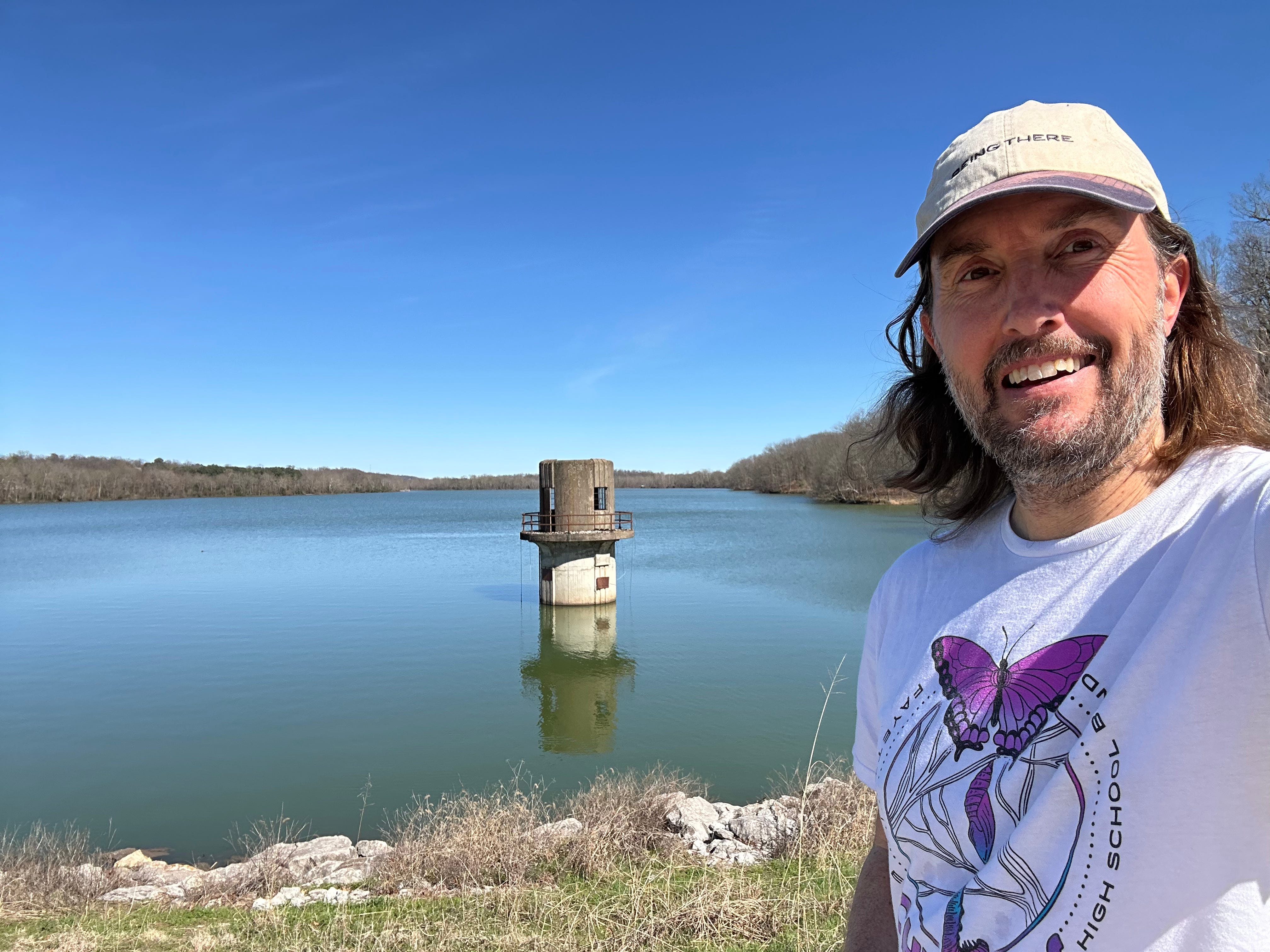
Movements are like that.
I also have to preach the same thing to myself sometimes, because there are moments when I’m frustrated with my own role and function within the movement I’m a part of. In those moments I need a pastor too—someone who helps me think about how I care and how I continue.
In this case, I think I got reconfigured by the drives themselves.
It occurred to me that the vast difference between simply being a radical organizer and being a pastor is the extent to which you do the work within a set of relationships.
And I have the peculiar privilege of doing the work that I do with the support and love of the congregation that I love back and try to care for in tangible ways.
A couple of small stories around that.
Over the past few months I’ve been developing a habit of trying to play ping pong with parishioners and friends. Yesterday I played one session with a parishioner, which is a great space just to have a caring conversation. And I had another ping pong session with the executive director of a local shelter nonprofit.
I’ve come to realize that regularly meeting in those kinds of interesting and joyful ways ends up bearing fruit for the work we do.
Today, Thursday, as I’m reflecting on all of this, I also sat down with a fundraiser for a small nonprofit that’s really struggling to get off the ground. We spent over an hour just talking about the landscape around the work she’s trying to do.
And it struck me again that simply knowing people in the community and spending regular time and attention with them ends up serving that kind of work as well. Those relationships create a kind of connective tissue across the community.
I’ve really come to believe that part of movement pastoring is exactly that: being embedded. Knowing the community broadly—its people, its tensions, its needs, its possibilities—while always remaining anchored in the life of the local congregation.
Because in the end, movements don’t just run on ideas or events. They run on relationships.
And pastoring, at least the way I experience it, means tending those relationships patiently over time, trusting that they are themselves part of the work.
Brings back memories, Clint, of some of my pastorates. But not all. Hard to do this kind of pastoral movement in an urban setting but easy to do the other kind of movement. These days when physical movement is more limited, I write.
Seems like movement pastoring is also your physical movement between the people in your communities past and present, connecting all those people with each other, whether they know it yet or not. Ping pong is right, sir. This helps me understand why it’s so crucial for me to get out and move around my campus, with or on behalf of our students and my colleagues. Thanks for the insight.